SVA MFA Photography Video and Related Media Thesis Exhibition Reception


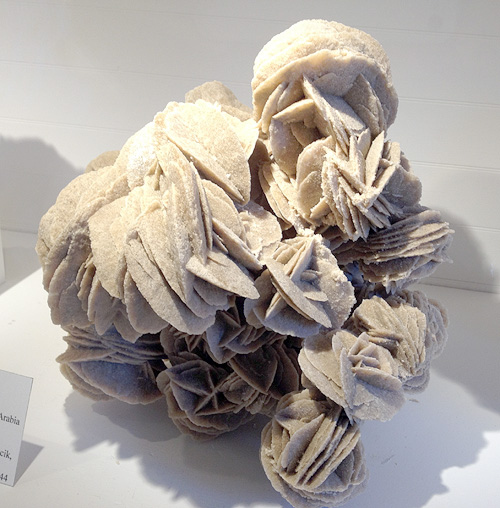
“Sierpinski Triangle”, Morphogenesis, Archival Inkjet Print, 2011, 30″x40″

Come by this Thursday and check out my thesis show at the Visual Arts Gallery!

Visual Arts Gallery
601 West 26th Street
New York, NY

Opening Reception: Thursday, June 16 6-8pm.

Show runs June 10 – 25, 2011.
Gallery Hours: Monday-Thursday 10am-6pm,
Friday 10am-5pm, Saturday 10am-6pm.

http://mfaphoto.schoolofvisualarts.edu/exhibition/2011/

Posted in Uncategorized | Leave a comment

Spencer Finch

Part of the MFA program at my school is picking an artist to meet for advice on my thesis project. The artist I picked and am very excited to be working with is Spencer Finch. I want to share an interview that Susan Cross had with him back in 2007 on his solo exhibition at Mass MoCA. He speaks about representation and his feelings on abstraction.

http://www.nyartsmagazine.com/index.php?option=com_content&task=view&id=6221&Itemid=174

An Excerpt:

“Spencer Finch: There’s a line from Freud where he talks about Kant, who said that there were two things—a moral thing and a natural thing—that continued to amaze him: the night sky and the goodness in the hearts of men. Freud was very dismissive, and said, “Oh yes, the night sky is quite beautiful.” I think it’s those two things, the idea of images that can straddle the space between abstraction and representation, and then also subject matter, that produces a sense of wonder and approaches this idea of the sublime. “

Posted in Uncategorized | Leave a comment

Grahame Weinbren on HD Technologies and Other Philosophies


Posted in Uncategorized | Leave a comment

Kittler On Photographic Technology

Le reel refers only to that which has neither a figure, like the imaginary, nor a syntax, like the symbolic. In other words, combinational systems and processes of visual perception cannot access the real, but this is precisely why it can only be stored and processed by technical media. The present can be distinguished from every earlier period by the fact that we live at a time when, with the help of Mandelbrot’s fractals, clouds can be calculated in their full randomness and then be made to appear on computer screens as calculated, unfilmed images. Practically speaking, however, this means that we must employ a considerable amount of film theory- which usually goes by the name of film semiotics- in order to clarify the radical new ways in which optical media handles the symbolic. This concerns, more concretely, techniques of montage and editing, and thus everything that has been regarded as specific media aesthetics since the time of Walter Benjamin.”

So, essentially, photography’s unique ability to represent the “real” was overtaken as soon as images could be worked out mathematically and reproduced digitally. Photography was put on the digital bandwagon but lost it’s technological uniqueness after Mandelbrot’s mathematics was realized. And while photography is still the most accessible way to create an image of something out in the world, it’s not unique in this pursuit.

Posted in Uncategorized | Leave a comment